
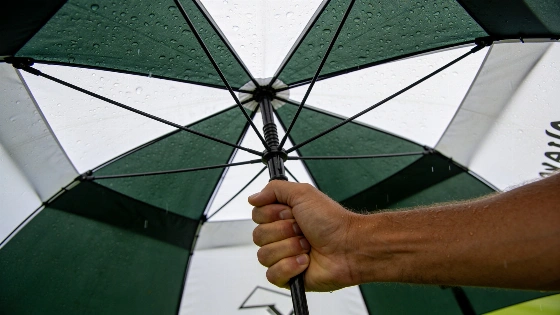
Golfers in 2026 confront unpredictable weather with a new generation of umbrellas designed for durability and protection. This guide breaks down the leading models and what sets them apart.
Rain can hit hard without warning, and when it does, a flimsy umbrella leaves golfers soaked and distracted. In 2026, the market is packed with options, but only a select few hold up when the wind picks up or the sun beats down for hours.
Industry specifications define a large tournament golf umbrella as having a canopy arc of 62 inches, which translates to an open diameter of about 52 inches, with the largest models ranging from 60 to 68 inches.
The TaylorMade 64" Double Canopy Umbrella leans on WindPro tech and a fiberglass shaft to shrug off gusts. Sun Mountain's 68" Auto Umbrella covers more ground and features a slip-resistant grip, with a handle shaped for Sun Mountain bags and six color choices. FootJoy's DryJoys Double Canopy Golf Umbrella uses a tough frame and waterproof build. Titleist's Jet Black Tour Double Canopy model adds an anti-inversion system and UV protection for those who play under harsh sunlight.
Callaway's Shield Double Canopy Umbrella pairs a textured handle with a rugged canopy and fiberglass shaft, available in two colorways. Ping's 68" Tour Umbrella opens with a push-button and stands out with its foam handle. All these models are built for unpredictable conditions. Double-canopy construction has become the standard for wind resistance and frame stability. As Dream-Cycle notes, the two-layer design lets air slip between the canopies, cutting wind pressure, while flexible fiberglass frames help prevent bending or snapping in strong gusts.
Golf Monthly's testers take umbrellas out in real storms and blustery days, rating them for coverage, handling, and toughness. Their verdicts come from field use, not marketing copy. Most large umbrellas use 210T pongee fabric, double-vented canopies, fiberglass ribs, and at least eight ribs to spread out stress and let air escape, as detailed in industry reviews.
Some manufacturers claim their vented umbrellas have been tested to withstand wind gusts exceeding 55 miles per hour (about 89 km/h), which corresponds to Beaufort scale 9-10, but these are manufacturer statements rather than results of independent certification.
Golfers who refuse to let the weather dictate their round know that a bargain-bin umbrella will not cut it. The models above have proven they can keep players dry and focused, whether the threat is rain or sun.
Accessories only matter if they work when it counts. In 2026, the best umbrellas combine tough engineering with practical design, letting golfers focus on their next shot instead of the next cloud. The right umbrella is essential gear that can decide the outcome of a round.