
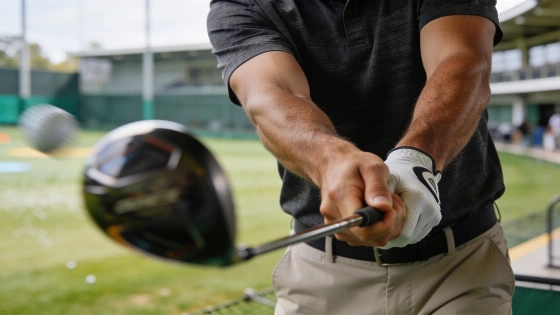
PGA coach Ged Walters breaks down how club golfers can add serious distance off the tee using targeted drills and real-world numbers. Shot Scope data shows the gap between average and advanced players is measurable-and fixable.
Most club golfers hit a wall with their driver. The numbers back it up: Shot Scope's tracking shows that longer drives consistently shave strokes off handicaps, making distance a hard metric for anyone aiming to climb the leaderboard.
According to Top Shelf Golf, the average driving distance for male amateurs in 2025 was 224.1 yards, based on nearly 10 million shots measured on course.
PGA pro Ged Walters, a Top 50 Coach with two decades of experience and input from names like Adrian Fryer and Jeff Ritter, cuts through the noise. He points to two main levers: technical fixes and practical training. Each targets a real-world distance killer that holds back club golfers.
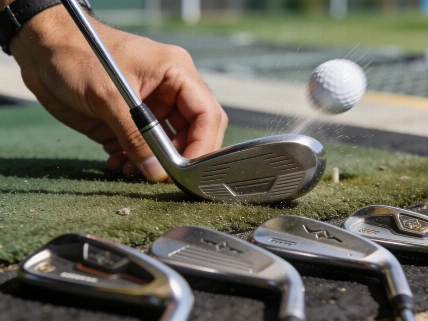
Strike location tops the list. Miss the center of the clubface and you bleed ball speed. Most amateurs misread their contact point, drifting toward the heel or toe and losing both power and accuracy. Walters drills players on finding and repeating the sweet spot.
Grip isn't just a detail. It's the link between hands and club. A grip that matches your natural hand shape lets you release fully through impact. Go too strong and you risk snap-hooks and a shut face, costing both distance and control. Walters tells players to start neutral and let their hands return to their natural position at impact.
Average driving distance varies significantly by handicap: players with a 0-4.9 handicap average 244 yards, while those with a 30+ handicap average just 181 yards. These figures include both carry and roll, reflecting real on-course performance rather than just launch monitor data.
Set-up matters. Walters checks spine tilt, hip tilt, and ball position. He wants the ball just inside the lead heel and the shirt buttons behind the trail-side belt buckle. Overdoing spine tilt leads to fat shots, so he keeps adjustments subtle. A slight drop in the trail hip sets up a strong launch angle.
Spin is a balancing act. Too much and the ball balloons, too little and it nosedives. Walters matches spin to clubhead speed: slower swingers need more spin for carry, faster players benefit from less. The fix is a centered strike with a square face.
Overspeed training with weighted sticks-like the Super Speed set-pushes swing speed higher. Walters moves players from light to heavy sticks, swinging hard to train faster movement. Early sessions can get wild, but the long-term payoff is real speed gains.
Wrist angle and set control the release. Training aids that hold the wrist set until the downswing help store and unleash energy at the right time. Release too early and distance disappears. Walters keeps players connected to the aid as long as possible for maximum effect.
Walters' system is built on measurable gains, not vague claims. He combines technical tweaks with hands-on training and instant feedback. The focus on strike, grip, and set-up means that extra clubhead speed actually turns into more yards, not just wilder swings.
His own jump past 240 yards as a 22-handicapper shows these methods work outside the pro ranks. The advice is grounded in data and practical drills, not empty promises. In a market full of shortcuts, Walters' plan stands out for its specificity and proof.